The
Art of War
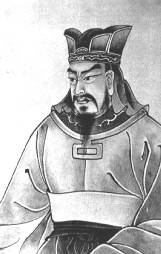
by
Sun Tzu
Translated
by Lionel Giles
Red
and Black Publishers, St Petersburg, Florida
This
translation first published 1910
Library of Congress Cataloging-in-Publication Data
Sunzi, 6th cent.
B.C.
[Sunzi bing fa. English]
The art of war / by Sun
Tzu ; translated by Lionel Giles.
p. cm.
ISBN 978-1-934941-16-4
1. War--Early
works to 1800. 2. Military art
and science--Early
works to 1800. I.
Giles, Lionel, 1875-1958. II. Title.
U101.S9513 2008
355.02--dc22
2008009884
Red
and Black Publishers, PO Box 7542, St Petersburg, Florida,
33734
Contact
us at: info@RedandBlackPublishers.com
Printed
and manufactured in the United States of America
Contents
Introduction
Sun Wu and his Book
5
The Text of Sun Tzu
18
The Commentators
21
Appreciations of Sun Tzu
27
Apologies for War
28
The
Art of War
Waging War 41
Attack By Stratagem 45
Tactical Dispositions
49
Energy 53
Weak Points and Strong
57
Maneuvering 63
Variation in Tactics
69
The Army on the March
73
Terrain 79
Tactical Dispositions
85
The Attack By Fire
95
The Use Of Spies
99
Introduction
Sun Wu and his Book
Ssu-ma Ch‘ien gives the following biography of Sun
Tzu1:
Sun
Tzu Wu was a native of the Ch‘i State. His Art Of War brought him to
the notice of Ho Lu2, King of Wu. Ho Lu said to him: “I have
carefully perused your 13 chapters. May I submit your theory of managing
soldiers to a slight test?” Sun Tzu replied: “You may.” Ho Lu asked:
“May the test be applied to women?” The answer was again in the affirmative,
so arrangements were made to bring 180 ladies out of the Palace. Sun Tzu divided
them into two companies, and placed one of the King’s favorite concubines at
the head of each. He then bade them all take spears in their hands, and
addressed them thus: “I presume you know the difference between front and
back, right hand and left hand?” The girls replied: “Yes”. Sun Tzu went
on: “When I say “Eyes front,” you must look straight ahead. When I say
“Left turn,” you must face towards your left hand. When I say “Right
turn,” you must face towards your right hand. When I say “About turn,” you
must face right round towards your back.” Again the girls assented. The words
of command having been thus explained, he set up the halberds and battle-axes in
order to begin the drill. Then, to the sound of drums, he gave the order
“Right turn.” But the girls only burst out laughing. Sun Tzu said: “If
words of command are not clear and distinct, if orders are not thoroughly
understood, then the general is to blame.” So he started drilling them again,
and this time gave the order “Left turn,” whereupon the girls once more
burst into fits of laughter. Sun Tzu: “If words of command are not clear and
distinct, if orders are not thoroughly understood, the general is to blame. But
if his orders are clear, and the soldiers nevertheless disobey, then it
is the fault of their officers.” So saying, he ordered the leaders of the two
companies to be beheaded. Now the king of Wu was watching the scene from the top
of a raised pavilion; and when he saw that his favorite concubines were about to
be executed, he was greatly alarmed and hurriedly sent down the following
message: “We are now quite satisfied as to our general’s ability to handle
troops. If we are bereft of these two concubines, our meat and drink will lose
their savor. It is our wish that they shall not be beheaded.” Sun Tzu replied:
“Having once received His Majesty’s commission to be the general of his
forces, there are certain commands of His Majesty which, acting in that
capacity, I am unable to accept.” Accordingly, he had the two leaders
beheaded, and straightway installed the pair next in order as leaders in their
place. When this had been done, the drum was sounded for the drill once more;
and the girls went through all the evolutions, turning to the right or to the
left, marching ahead or wheeling back, kneeling or standing, with perfect
accuracy and precision, not venturing to utter a sound. Then Sun Tzu sent a
messenger to the King saying: “Your soldiers, Sire, are now properly drilled
and disciplined, and ready for your majesty’s inspection. They can be put to
any use that their sovereign may desire; bid them go through fire and water, and
they will not disobey.” But the King replied: “Let our general cease
drilling and return to camp. As for us, we have no wish to come down and inspect
the troops.” Thereupon Sun Tzu said: “The King is only fond of words, and
cannot translate them into deeds.” After that, Ho Lu saw that Sun Tzu was one
who knew how to handle an army, and finally appointed him general. In the west,
he defeated the Ch‘u State and forced his way into Ying, the capital; to the
north he put fear into the States of Ch‘i and Chin, and spread his fame abroad
amongst the feudal princes. And Sun Tzu shared in the might of the King.
About
Sun Tzu himself this is all that Ssu-ma Ch‘ien has to tell us in this chapter.
But he proceeds to give a biography of his descendant, Sun Pin, born about a
hundred years after his famous ancestor’s death, and also the outstanding
military genius of his time. The historian speaks of him too as Sun Tzu, and in
his preface we read: “Sun Tzu had his feet cut off and yet continued to
discuss the art of war.”3 It seems likely, then, that
“Pin” was a nickname bestowed on him after his mutilation, unless the story
was invented in order to account for the name. The crowning incident of his
career, the crushing defeat of his treacherous rival P‘ang Chuan, will be
found briefly related in Chapter V. ss. 19, note. To return to the elder Sun Tzu.
He is mentioned in two other passages of the Shih Chi:
In
the third year of his reign [512 B.C.] Ho Lu, king of Wu, took the field with
Tzu-hsu [i.e. Wu Yuan] and Po P‘ei, and attacked Ch‘u. He captured the town
of Shu and slew the two prince’s sons who had formerly been generals of Wu. He
was then meditating a descent on Ying [the capital]; but the general Sun Wu
said: “The army is exhausted. It is not yet possible. We must wait”....
After further successful fighting, in the ninth year [506 B.C.], King Ho Lu
addressed Wu Tzu-hsu and Sun Wu, saying: “Formerly, you declared that it was
not yet possible for us to enter Ying. Is the time ripe now?” The two men
replied: “Ch‘u’s general Tzu-ch‘ang,4 is grasping and
covetous, and the princes of T‘ang and Ts‘ai both have a grudge against him.
If Your Majesty has resolved to make a grand attack, you must win over T‘ang
and Ts‘ai, and then you may succeed.” Ho Lu followed this advice, beat
Ch‘u in five pitched battles and marched into Ying.5
This
is the latest date at which anything is recorded of Sun Wu. He does not appear
to have survived his patron, who died from the effects of a wound in 496. In
another chapter there occurs this passage:6
From
this time onward, a number of famous soldiers arose, one after the other:
Kao-fan,7 who was employed by the Chin State; Wang-tzu,8
in the service of Ch‘i; and Sun Wu, in the service of Wu. These men developed
and threw light upon the principles of war.
It
is obvious enough that Su-ma Ch‘ien at least had no doubt about the reality of
Sun Wu as an historical personage; and with one exception, to be noticed
presently, he is by far the most important authority on the period in question.